Inside the House of Stories: Part 1
Archivist Fran Baker shares her insights into a remarkable history of a family and home connected by literature
‘The Library is a breathtaking space which manages to feel both spectacular and intimate at the same time’ says Chatsworth’s Head of Archive and Library, Fran Baker. Fran oversees the development, documentation, care, and preservation of The Devonshire Collections.
‘The Devonshire family also still use the Library when the house is closed to visitors, and as it remains part of their home, that sense of lived-in continuity adds to its on-going appeal’ Fran adds.
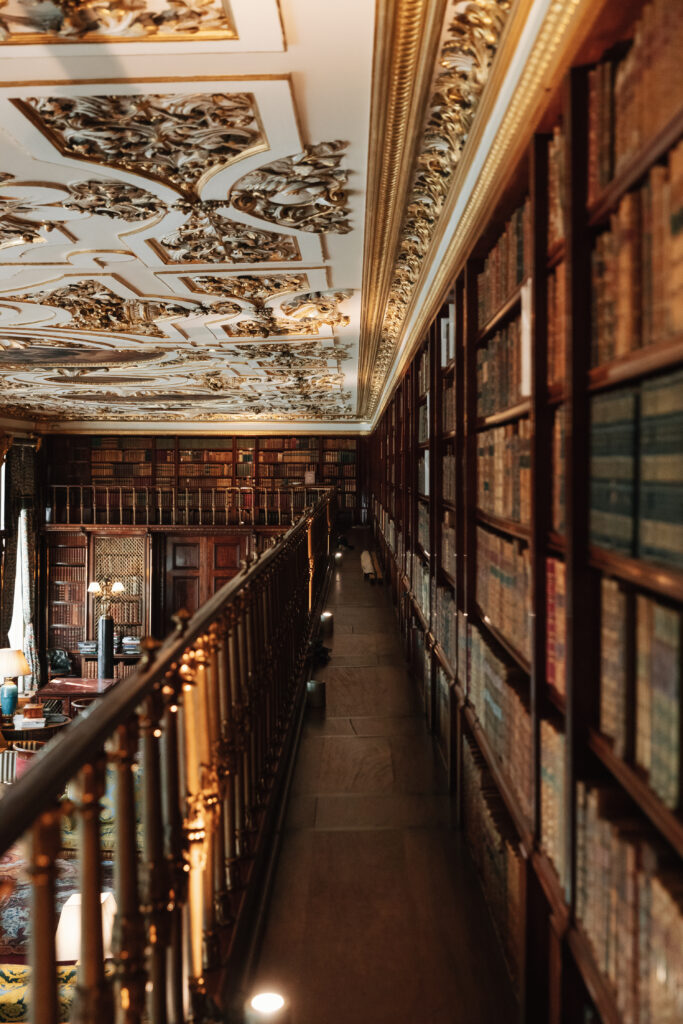
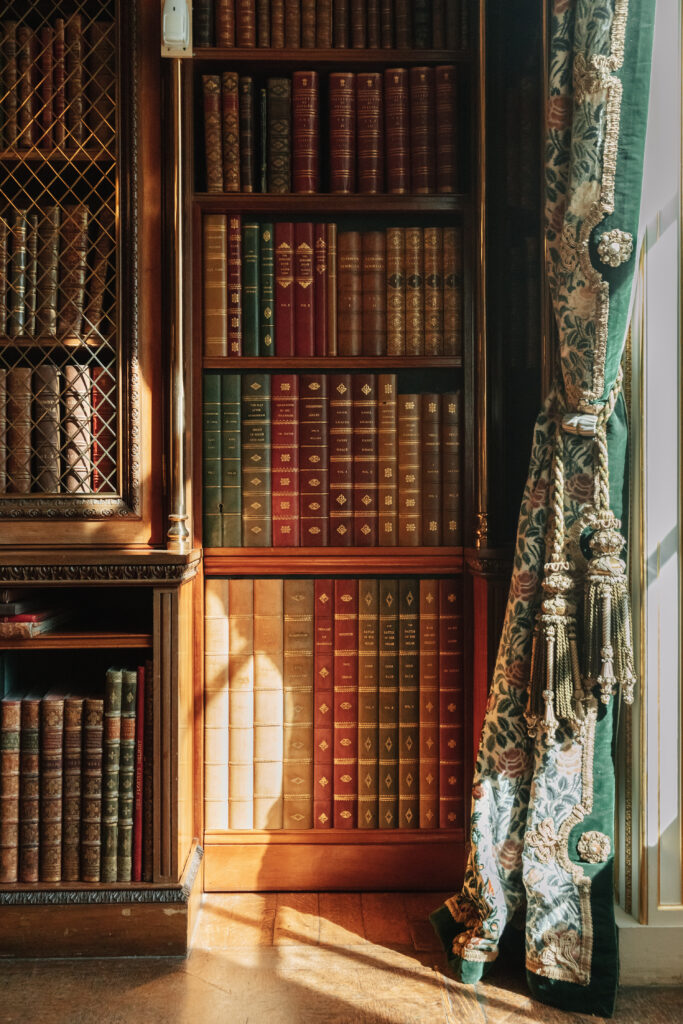
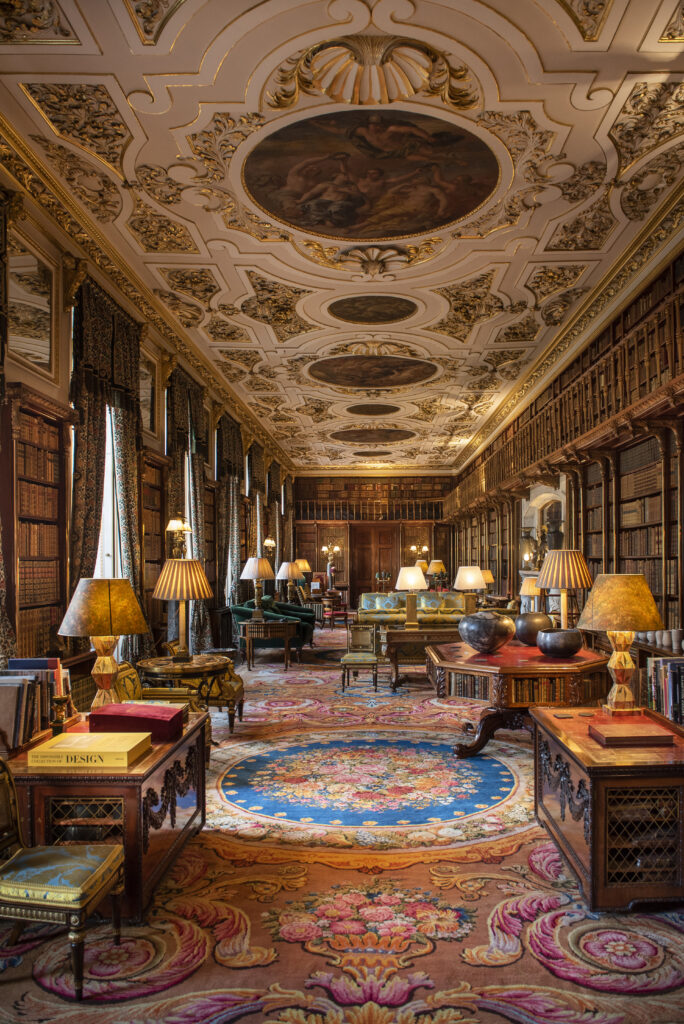
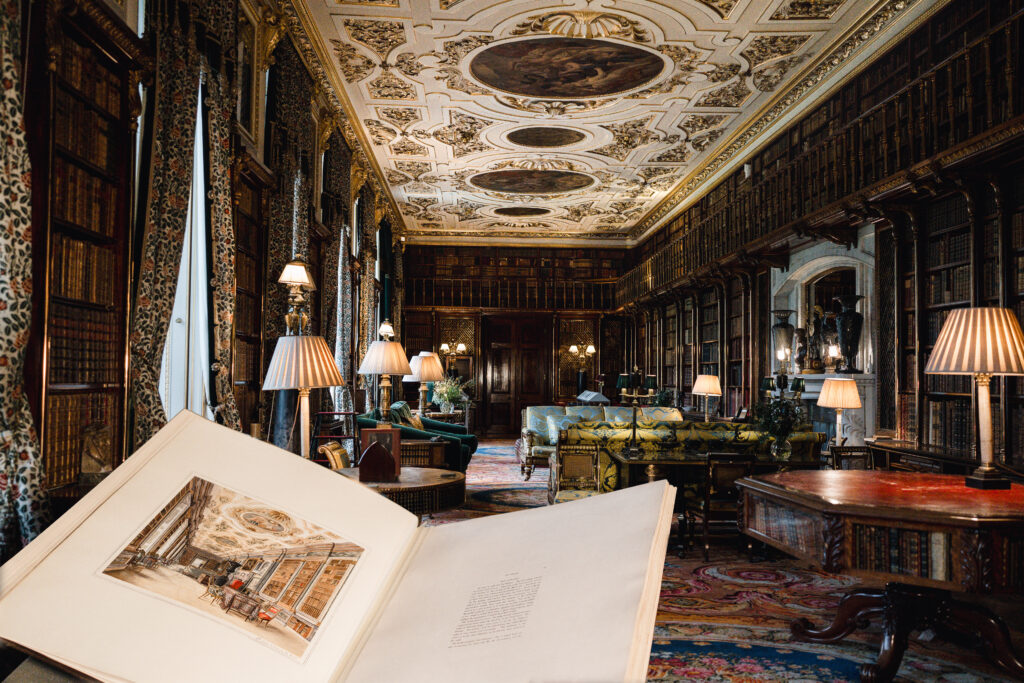
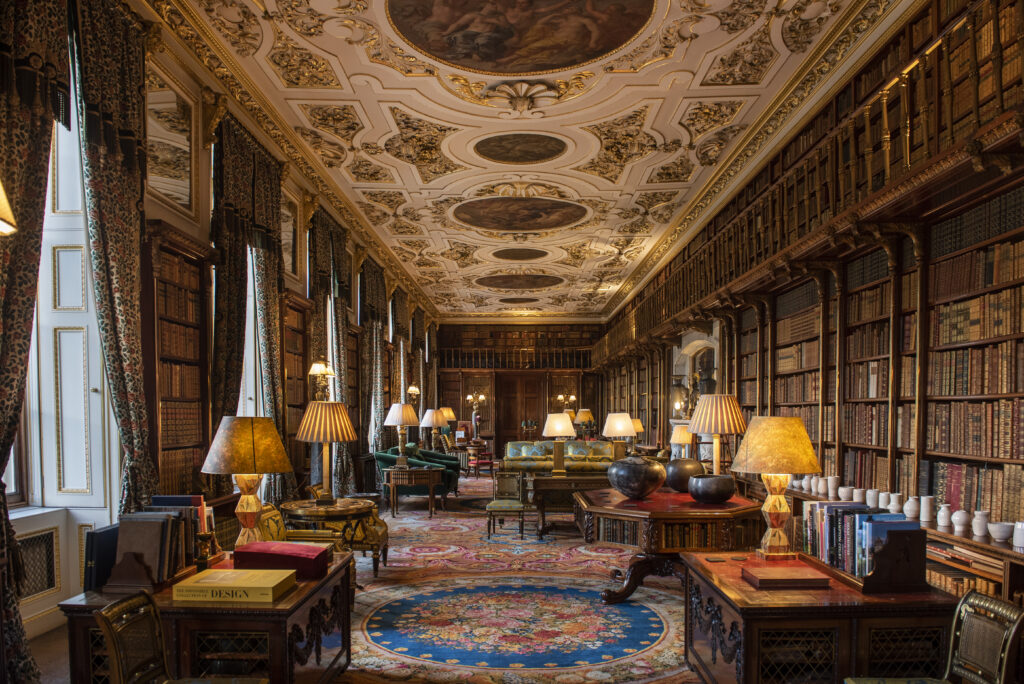
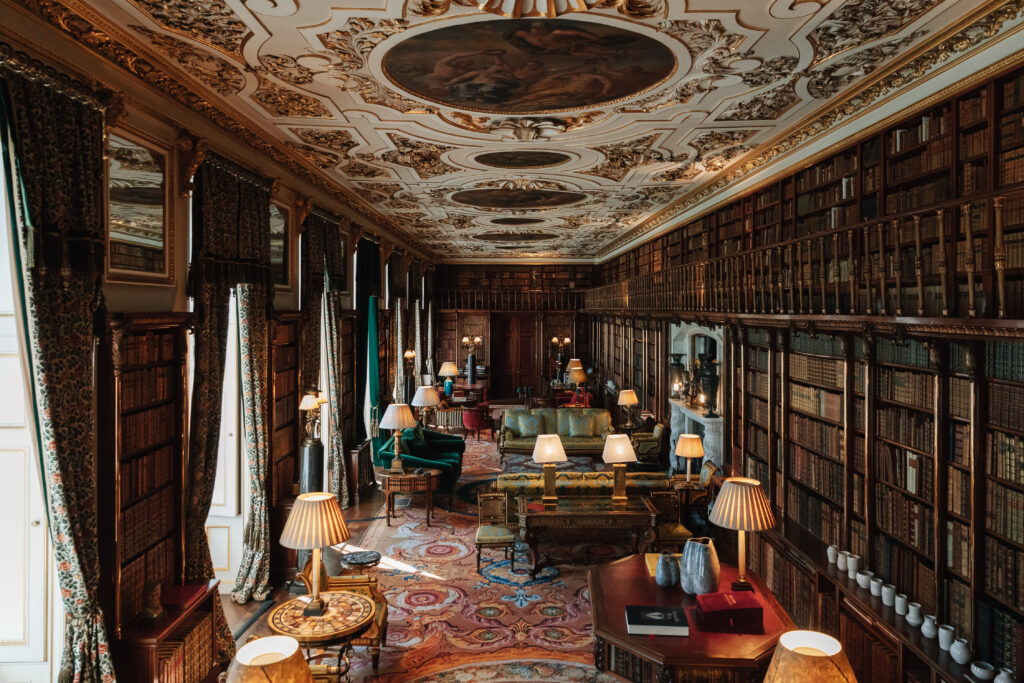
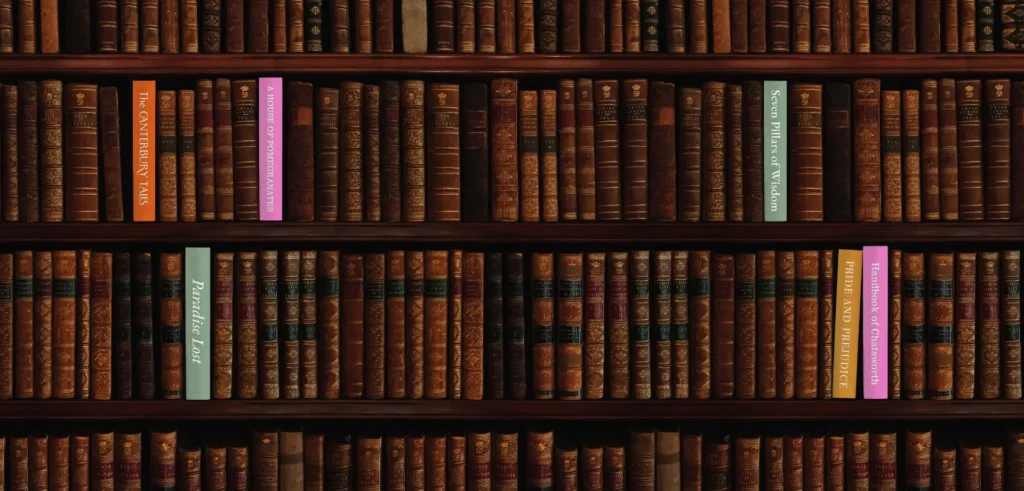
The library remains one of the most visited interiors, holding historic bound volumes in mahogany cases set on an Axminster carpet, with hand‑painted motifs and plasterwork above.
‘The allure of the Library is also likely to be heightened by its coveted collection of famous works such as first editions of Pride & Prejudice and Robinson Crusoe – in fact, these pieces will feature in our literary themed exhibition’ says Fran.
Through a discussion of her role and the collections, Fran outlines the background to Chatsworth’s 2026 exhibition, House of Stories: Tales from the Chatsworth Library.
Can you tell me more about your role at Chatsworth?
“As the Head of Archive & Library, I manage a small team of three who care for both collections; although they are overseen together, these are two quite distinct collections. The archives comprise the documentary heritage of Chatsworth and the family’s other estates, spanning more than 500 years. They include the family’s personal papers as well as the extensive records generated through the management of their estates, and together fill around 8,000 boxes.”
“The Library, by contrast, is the extensive book collection now housed at Chatsworth, consisting primarily of printed books, alongside a small number of handwritten manuscripts. Through my role, I ensure that both the library and archive collections are made accessible and promoted – this involves supporting researchers and enquirers, delivering talks and tours, developing displays, and working on special projects.”
How do you ensure that historic collections are protected and cared for?
“With such a delicate collection of rare works, an essential part of my team’s role is practical preservation. All of our storage areas are repurposed spaces – for instance, many library books not on the visitor route are housed in former servants’ bedrooms in the attics. These environments present ongoing challenges, and we regularly monitor for pests, temperature, and humidity, as well as undertaking routine cleaning. We have an ongoing programme to rehouse our earlier and more significant books in bespoke protective boxes. Alongside this, we have an active conservation programme. As we don’t have an in-house book and paper conservator, items in need of interventive treatment are sent to external specialists.”
When did the Library collection begin?
“The origins of the collection itself can be traced back to the early 1600s at Hardwick Hall, the family’s principal residence at the time. By the 1620s, more than 1,400 books were already housed there. Over subsequent generations, books were acquired at the family’s other properties, and during the 19th century most of these collections were brought together at Chatsworth. As a result, the library represents centuries of book collecting by the Devonshire family, with its contents reflecting the varied interests and passions of those who contributed to it. We believe there are around 37,000 books in the collection covering a very wide range of topics from literature, travel and science through to natural history, architecture and philosophy to name a few.”
How has the interior developed over time?
“The Library space as we know it today was created by the 6th Duke of Devonshire, with work beginning in 1815. Before this transformation, the room had served as the gallery – a light, airy space where the family would take exercise during inclement weather. The 6th Duke was the family’s most enthusiastic book collector and having inherited the title in 1811, he soon found himself in urgent need of additional space to house his rapidly expanding collection.”
“The conversion of the gallery into a library took place before his other major rebuilding projects at Chatsworth. In 1829, he commissioned his architect Sir Jeffry Wyatville to make further alterations, the most significant being the addition of a high-level gallery. These changes created the Library space we see today.”
Can you describe some of the library’s most prominent decorative artwork and furnishings?
“The ceiling is the only substantial part of the earlier 17th-century interior to survive today. The painted roundels are by Antonio Verrio, whose work appears elsewhere in the house, and they depict Apollo, Mercury, and Minerva presiding over the Muses. The circular motifs of the ceiling are mirrored by the design of the carpet below – an Axminster commissioned especially for the room by the 6th Duke around 1830. The Duke felt that Axminster carpets were more durable and faded less than the French Savonnerie carpets that were fashionable at the time. His architect didn’t share this enthusiasm, and reportedly hoped the carpet would fade, feeling that its vivid colours detracted from the ceiling.”
How did the historic furniture become part of this space?
“Several pieces of furniture in the Library originated at other family properties. Some of these combine practicality with fine design; most notable are four mahogany book tables from Chiswick House, made by William Kent in the 1730s. In addition, some of our small books are stored in an octagonal table dating from the mid-19th century. This piece has an intriguing feature in the form of a bullet embedded in its surface. According to tradition, it dates from an accident in 1943, when American troops carrying out training exercises on the moors above the house mistakenly used live ammunition, and a stray bullet somehow found its way into the Library.”
Which book do you find the most interesting within the Library collection?
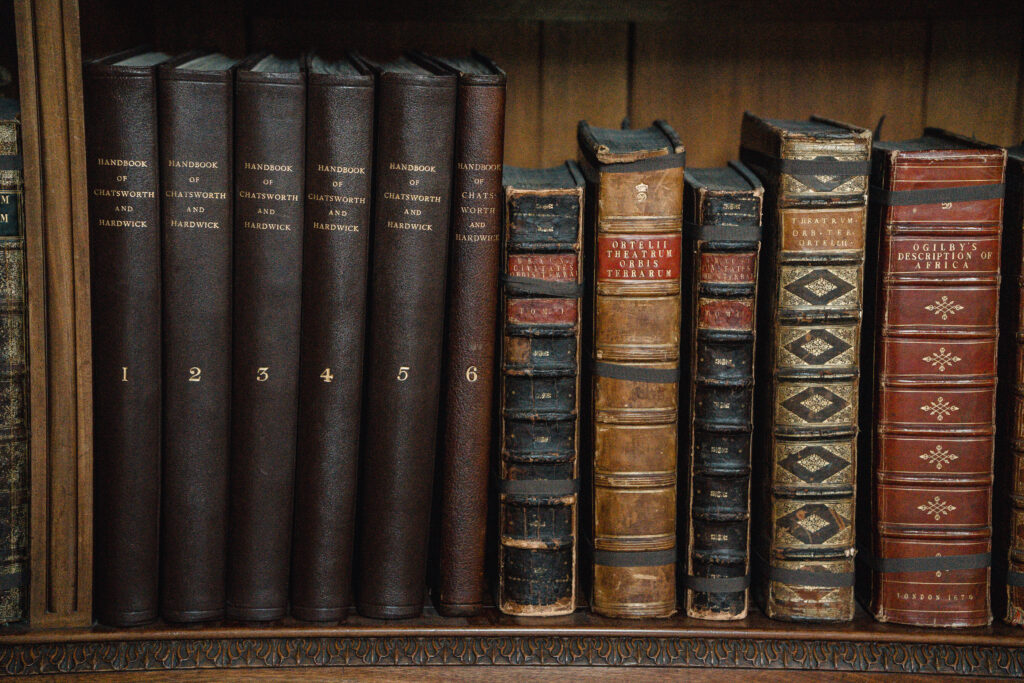
“If I had to choose one, it would probably be our extra-illustrated copy of the 6th Duke’s Handbook of Chatsworth and Hardwick. Originally published privately in 1845, this is an informal guide to the house and its contents intended only for family and close friends. Written in a chatty, conversational style, it feels like being shown around the house in the Duke’s company; he weaves in lots of anecdotes and observations, and his sense of humour really shines through.”
“The Duke also had an intention of creating an extra-illustrated version – interleaving the text with related visual material, but unfortunately, he didn’t complete it during his lifetime. However, it was later taken up by his great-niece, Lady Louisa Egerton, who worked on it over many years. She expanded the original into six large volumes and filled it with engravings, watercolours and sketches of paintings as they were displayed in the house at the time.”
How do the Chatsworth library collections aid external research?
“We support academic research on a regular basis through our Study Room service, and we are constantly learning about the collection from our visiting researchers. Most recently, a PhD student worked on our collection of incunabula (or incunables). The term, derived from the Latin word for swaddling clothes, refers to books printed before 1501, during the earliest years of printing. As a result of this work, we now know that the Library holds 667 incunabula – a remarkable number for a private collection – and most of these have been identified. We hope to secure funding to appoint a specialist to research these further and produce the detailed catalogue records they merit. Several of these remarkable books will feature in our 2026 exhibition.”
Which are the most famous and rarest works found within the Library?
“Although it is not our rarest book, the item we are asked about most frequently is our first edition of Jane Austen’s Pride and Prejudice. In fact, we actually have two first editions. One is bound in an elegant gold-tooled binding, while the other is in a much plainer publisher’s binding, perhaps intended as a practical reading copy rather than a showpiece for the shelves.”
“Identifying the rarest item in the collection is more challenging. We hold a large group of around 4,000 pamphlets – short, quickly produced publications on political, religious, and literary subjects that were issued in large numbers during the 17th-19th centuries. We know that some of these pamphlets are unique. In other cases, we know we have one of only two or three surviving copies of a particular edition.”
Which other distinctive features have determined the scarcity of literary works?
“Many of our books are unique because of what has been added to them over time: hand-drawn illustrations or illumination, annotations, or other distinctive features. One example, which will be on display in the 2026 exhibition, is a pocket-sized volume of love poetry by the medieval Italian poet Petrarch. Printed in 1514 by Aldus Manutius – the most important printer of his day, whilst other copies of this book certainly survive elsewhere, our copy is quite extraordinary. It is full of hand-drawn decorations believed to have been commissioned by a member of the powerful Medici family. The result is dazzling. Beyond the full-page illustrations, the margins are filled with tiny, exquisite paintings, often unrelated to the text but executed with remarkable skill. My personal favourite depicts a small bird, quill in claw, writing a manuscript.”
How have generations at Chatsworth offered literary patronage to authors of their time?
“As a prominent aristocratic family, the Devonshires have been sought out as literary patrons for centuries. The Library contains many examples of books dedicated to family members, as well as publications issued by subscription in which a Devonshire was listed among the subscribers. To give just two examples, in the 1600s Countess Christian, wife of the 3rd Earl of Devonshire, moved within literary circles and was a particular supporter of Royalist poets. She was the dedicatee of several works and was personally acquainted with a number of well-known writers of her time.”
“Much later, the 6th Duke of Devonshire attracted the attention of various authors seeking patronage. He provided financial support to the poet Leigh Hunt and, more famously, was approached by Charles Dickens to host an amateur theatrical performance at Devonshire House in aid of the Guild of Literature and Art. The Duke was a great fan of Dickens, so he was very flattered by the request, which led to a lasting friendship between the two men.”
Within the Devonshire family, which authors and titles feature as part of the Library?
“Several members of the Devonshire family have been writers themselves. Duchess Georgiana was a very prolific writer, producing novels, poetry, and plays. During her lifetime she published very little and usually chose to remain anonymous, never publicly acknowledging works that were widely believed to be hers. We don’t even hold a first edition of her novel The Sylph, published in 1778 – only a second edition – and among the thousands of letters in the archive there is just a single passing reference to it. However, the archives preserve a manuscript play and many unpublished poems by the Duchess, forming a remarkable treasure trove and an extraordinary record of her creativity.”
“In more recent times, the family’s best-known writer was Duchess Deborah – her writing reflects her deep attachment to Chatsworth. She published several memoirs, including a tribute to her husband, Andrew Cavendish, 11th Duke of Devonshire, as well as several much-loved books about Chatsworth itself.”
As well as books, do documents and papers also form part of Chatsworth’s library collections?
“Yes – although these are technically part of the archives, rather than the library. We have papers created and accumulated by family members since Tudor times onwards. There are tens of thousands of letters, and given the prominence of the Devonshires, these feature many famous names – monarchs, statesmen and politicians, architects, writers, artists and many others. Alongside this correspondence are personal journals and diaries, scrapbooks (the 6th Duke in particular was a devoted scrapbooker), notebooks, financial records and photographs.”
“In addition, we care for the extensive body of papers generated through the management of the vast Devonshire estates, which at their height in the late 19th century extended to nearly 199,000 acres. These include maps, estate surveys and rentals, financial records, agents’ correspondence and more. Together, these collections are very heavily used by a wide range of researchers, both within Chatsworth and internationally.”
Does the Library include pieces relating to scientist Henry Cavendish?
“We do hold significant material relating to the scientist Henry Cavendish. The 6th Duke inherited Cavendish’s personal library, which comprised at least 12,000 volumes. Although these books are now dispersed throughout the library, they are easy to identify, as Cavendish always used a book stamp bearing his name and often used a distinctive gold-tooled spine design for his bindings. We also hold his archive, which is highly significant. It includes correspondence, extensive scientific notes and papers, and a huge handwritten catalogue of his library.”
“Recently, funding from the Duke of Devonshire’s Charitable Trust and the American Institute of Physics enabled us to appoint a project archivist to catalogue this collection. The resulting catalogue is now freely available online via the Archives Hub, and the archivist also produced a series of blog posts and a video exploring her discoveries, all of which can be found on Chatsworth’s website.”
Tell me about the secret door within the Library – how is this hidden amongst the library itself?
“When Sir Jeffry Wyatville added the Library Gallery in 1829, a door was needed to access the books stored on the upper level. To preserve the visual harmony of the room, this was designed to blend into its surroundings – it was disguised with rows of false book spines bearing humorous titles, reflecting the wit of the period. In the 1950s, this door was permanently sealed in order to accommodate a food lift, and a new access door was created at the north end of the library. This later door is also concealed by fake books, with titles devised by writer Patrick Leigh Fermor, a friend of the Devonshires. These include Sideways through Derbyshire by Crabbe, Gloucester in All Weathers by Dr. Foster and Intuition by Ivor Hunch – along with many others.”
During your time at Chatsworth, have you uncovered new editions or discovered any surprising finds?
“I made a particularly pleasing discovery quite early on while browsing the Library shelves: a small handwritten volume containing numerous poems from the 1600s, described simply in our catalogue as ‘MS Poems’ The handwriting reveals that it was compiled by more than one person, and it includes poems by multiple authors, identifying it as a verse miscellany. Volumes of this kind were commonly used to circulate poetry in manuscript among friends and acquaintances.”
“Many poets – often aristocrats associated with the royal court – preferred this mode of circulation, considering print to be rather vulgar. John Donne is probably the most famous poet represented in the volume – four of his lyric poems are included, all of them about love and seduction. Verse miscellanies like this are of great interest to literary scholars, and I hope that a researcher will undertake a detailed study of it one day.”
How have you supported the curation of the new 2026 exhibition?
“I have identified and selected the books and manuscripts on display, researched them, and written the interpretation. The exhibition explores the history of the Library itself, as well as the Devonshire family’s long-standing role as both literary patrons and writers. It also highlights some of our most significant literary treasures and considers books as objects with life stories of their own – we look at how they were produced, bound, collected, and used over time.”
“Some highlights include a fragment of Chaucer’s Canterbury Tales dating from the early 1500s; first editions of some classics of English literature such as Milton’s Paradise Lost and Daniel Defoe’s Robinson Crusoe. The exhibition will also feature letters from celebrated writers such as Charles Dickens, William Makepeace Thackeray, Elizabeth Gaskell, and Charlotte Brontë, as well as papers relating to Lady Caroline Lamb and Lord Byron – along with much more besides.”
What do you hope visitors will learn or be inspired by when they see the exhibition?
“The main focus of the exhibition is on literature – novels, poetry, and plays – so it will appeal to anyone who loves reading. Throughout the year, visitors are invariably captivated by the books and often ask all sorts of questions about the collection. As the exhibition will bring some of the Library’s greatest treasures out into other parts of the house for visitors to see up close for the first time, this will help to answer many of those questions. I also hope that visitors will leave with a deeper understanding of the Devonshire family’s role in reading, collecting, and supporting literature over the past 500 years.”
House of Stories: Tales from the Chatsworth Library, will run from 21 March-4 October 2026.
For more information and to book tickets: www.chatsworth.org